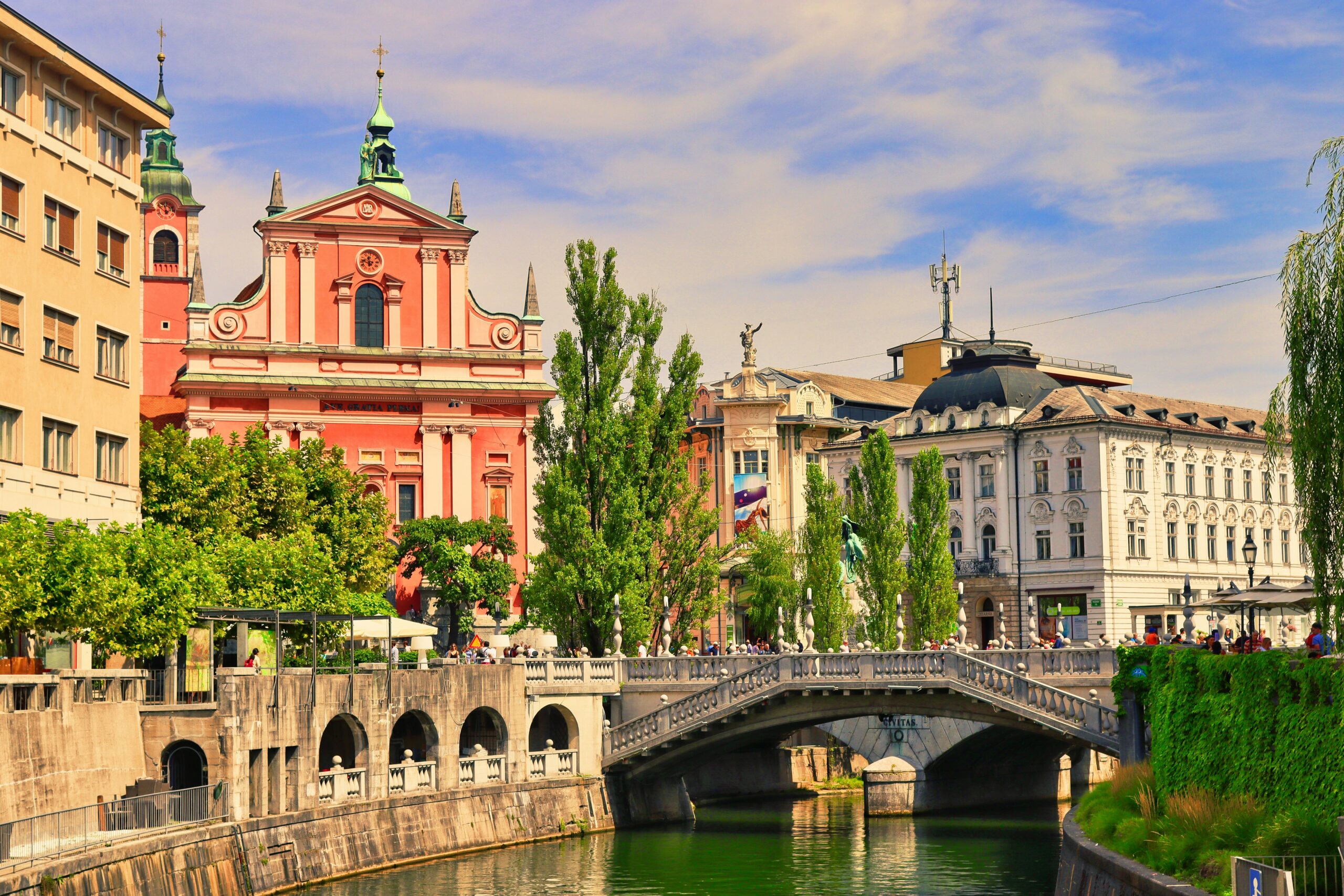
This 7-day road trip in Slovenia showcases the country’s fabulous blend of natural beauty, historic towns and vibrant culture. It is also one of Europe’s most underrated road trip destinations. From the cobbled streets of the capital city, to the wine country and the Venetian charm of Piran, this compact country offers a little bit of everything. Whether you’re drawn to medieval castles, coastal towns, or city scapes, this guide to road tripping in Slovenia will show you where to go.
This 7-day road trip itinerary in Slovenia combines history, culture, architecture and nature. It is perfect for first-time visitors and seasoned travellers.
Day 1 Ljubljana: Starting the road trip in Slovenia
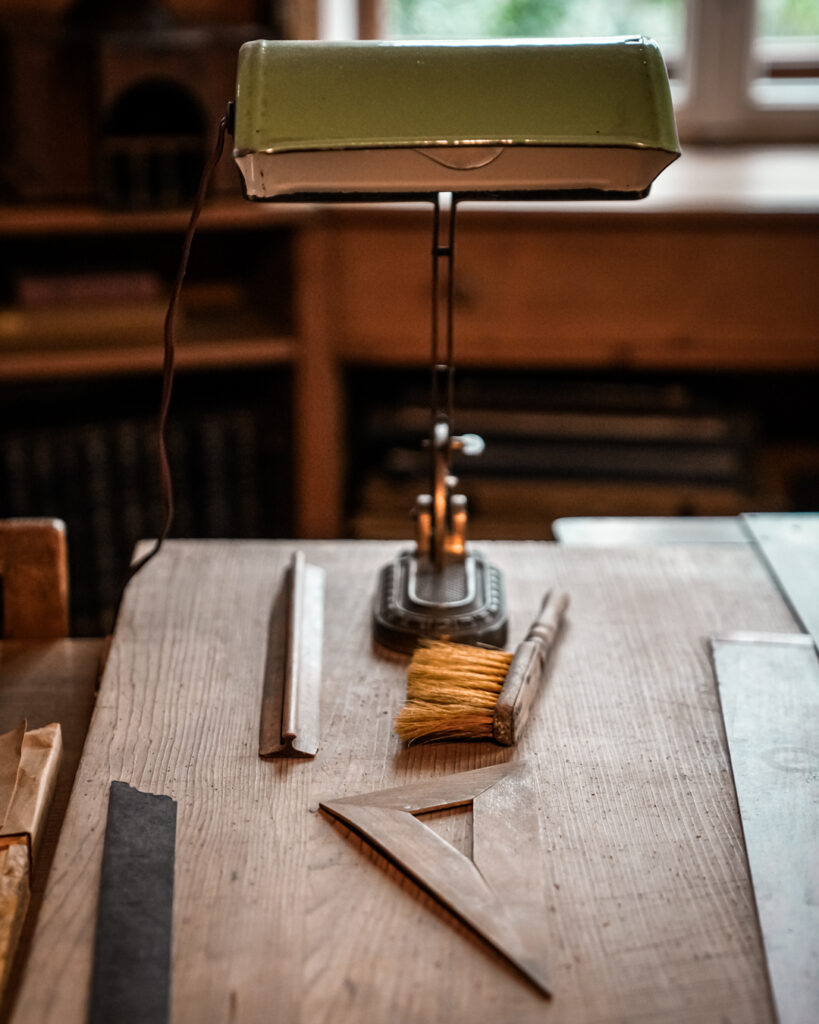
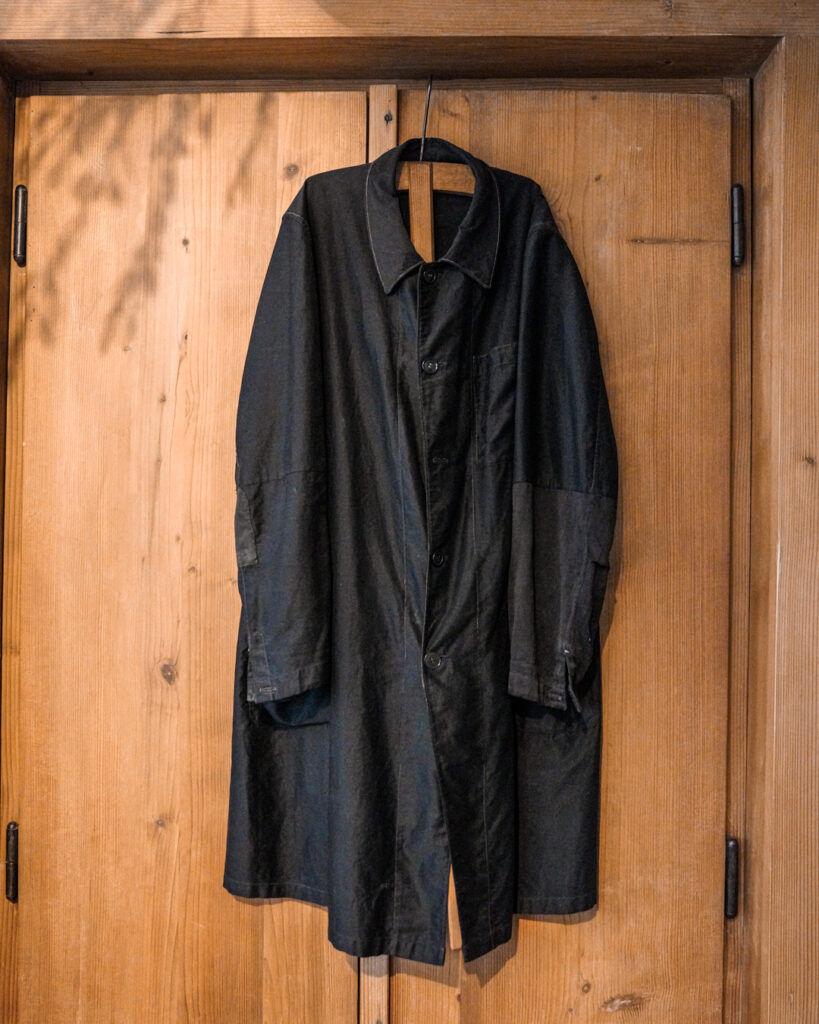
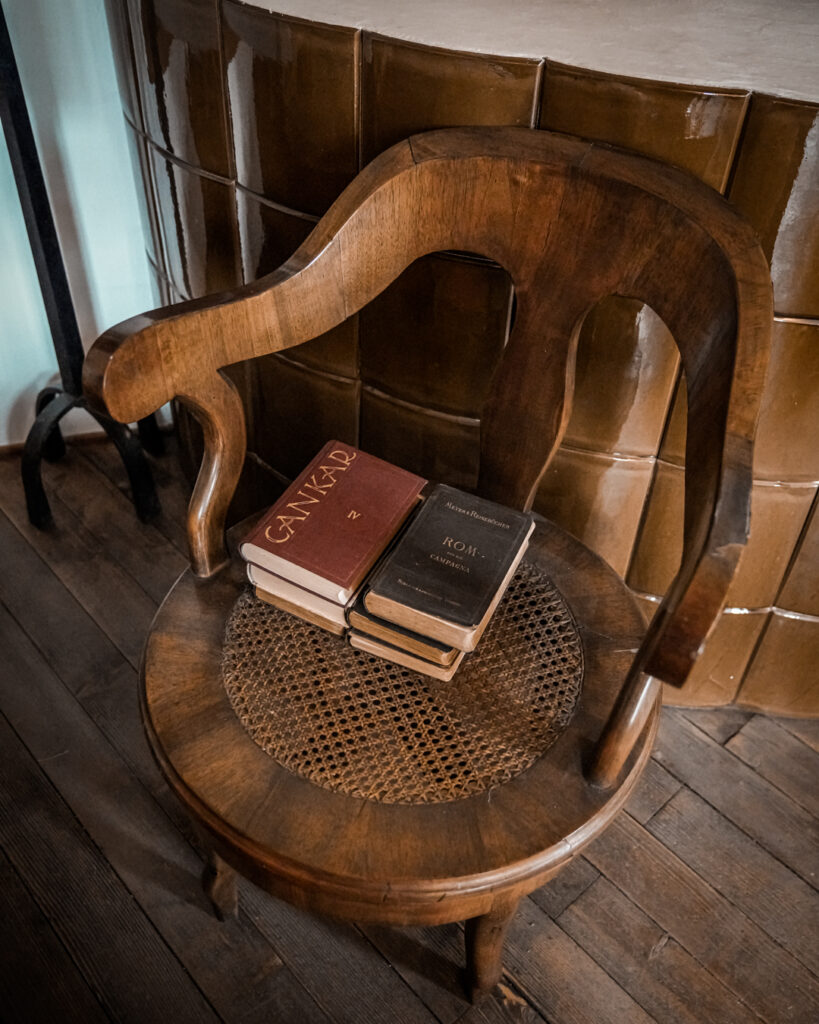
Start your visit in Ljubljana by stepping into the city’s most charming museum: the Plečnik House. This was once the home of Jože Plečnik, an architect who left a significant mark on Ljubljana’s appearance. The museum has a lovely atmosphere, and you might even pick up some interior design inspiration here. To visit, you’ll need to book a ticket for a guided tour (€9).
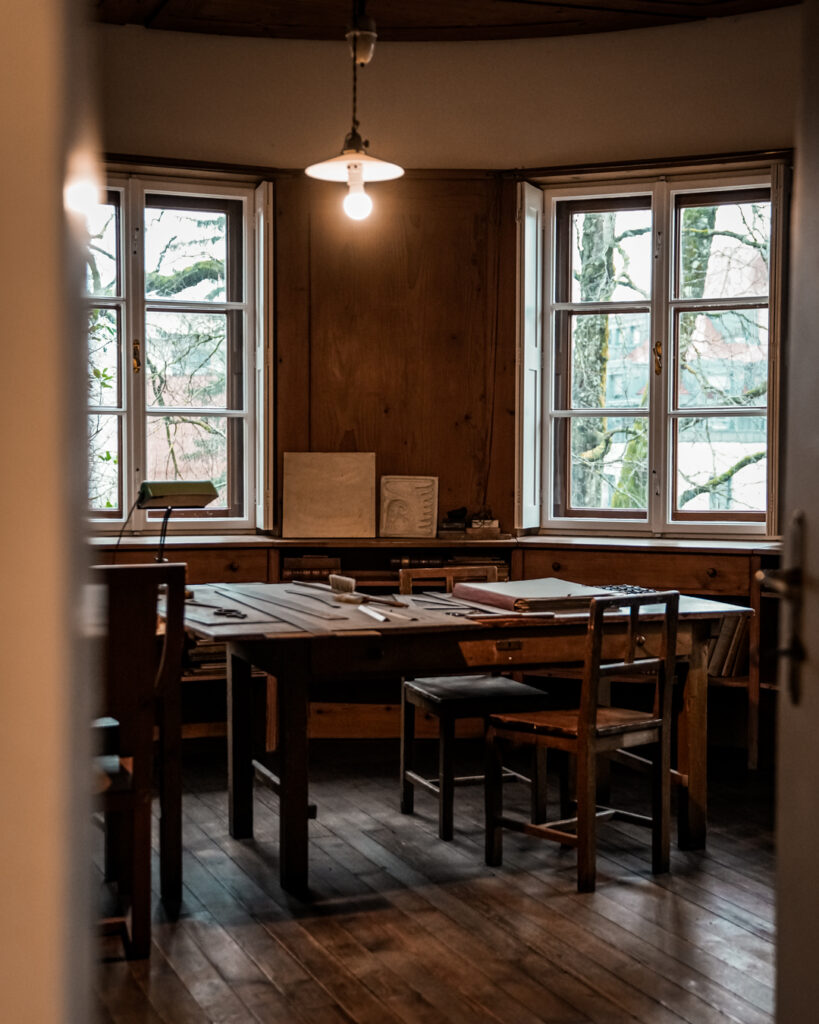
From Plečnik House, follow the Ljubljanica River to the Dragon Bridge. The pretty shopfronts and restaurant façades will keep you entertained along the 1.5-kilometre walk. Constructed between 1900 and 1901, the Art Nouveau dragons guarding the bridge are an impressive sight, lending Ljubljana a storybook feel.
Next, take a look at the Central Market and the covered market designed by Plečnik, steps away from the Dragon Bridge. If you don’t find anything to eat here, head to Raw Pasta. The cosy restaurant serves the city’s most delicious pasta just a block north of the riverside bustle.
After lunch, enjoy a stroll in Tivoli Park. Walk along the straight Jakopič Promenade, designed by the one and only Jože Plečnik, to Tivoli Mansion, which houses Slovenia’s International Centre of Graphic Art (€6).
Wrap up the day with a dip in Neu Residences rooftop pool before turning in for the night. You can read more about my stay at Neu Residences here.


Day 2: Ljubljana – Nova Gorica and Gorizia – Šmartno
Ljubljana – Nova Gorica: 1 hour 10 minutes / 100 km
Nova Gorica – Šmartno: 20 minutes / 15 km
After a tasty breakfast at the Neu Residences café, start driving towards the 2025 UNESCO Capital of Culture, Nova Gorica. The city was divided into two after the Second World War, with its Italian twin, Gorizia, sharing the UNESCO accolade.
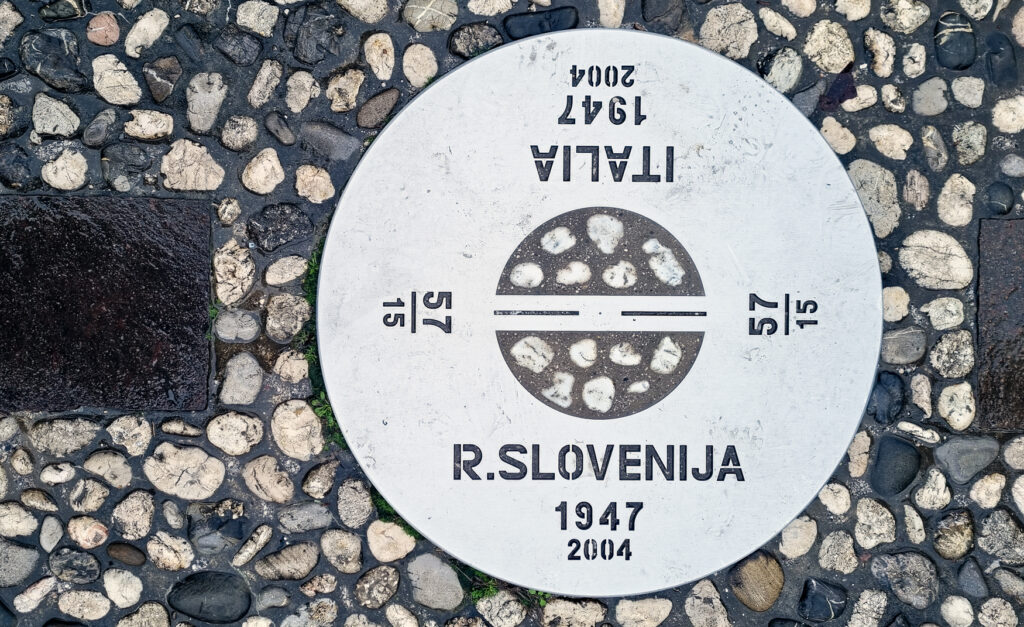
Begin at Europe Square, where a plaque on the ground marks the invisible border between Slovenia and Italy. Beside the square, you’ll find Nova Gorica’s historic railway station, a perfect spot for a quick coffee break before continuing.
From here, it’s a five-minute drive up to the Franciscan Monastery at Kostanjevica. The monastery houses the crypt of the Bourbon dynasty: exiled royalty who fled their homeland, fell in love with this hilltop, and chose it as their final resting place. From here, you’ll have a sweeping view of the divided city, while the monastery itself has a beautiful rose garden.
Next, descend back into the city and cross over to explore the Italian side in more detail. Its old town is home to a variety of restaurants that make a perfect lunch stop.
With your appetite satisfied, visit Gorizia Castle, a hilltop fortress that today houses a Museum of the Middle Ages, before starting your drive towards Šmartno in the Brda wine country.
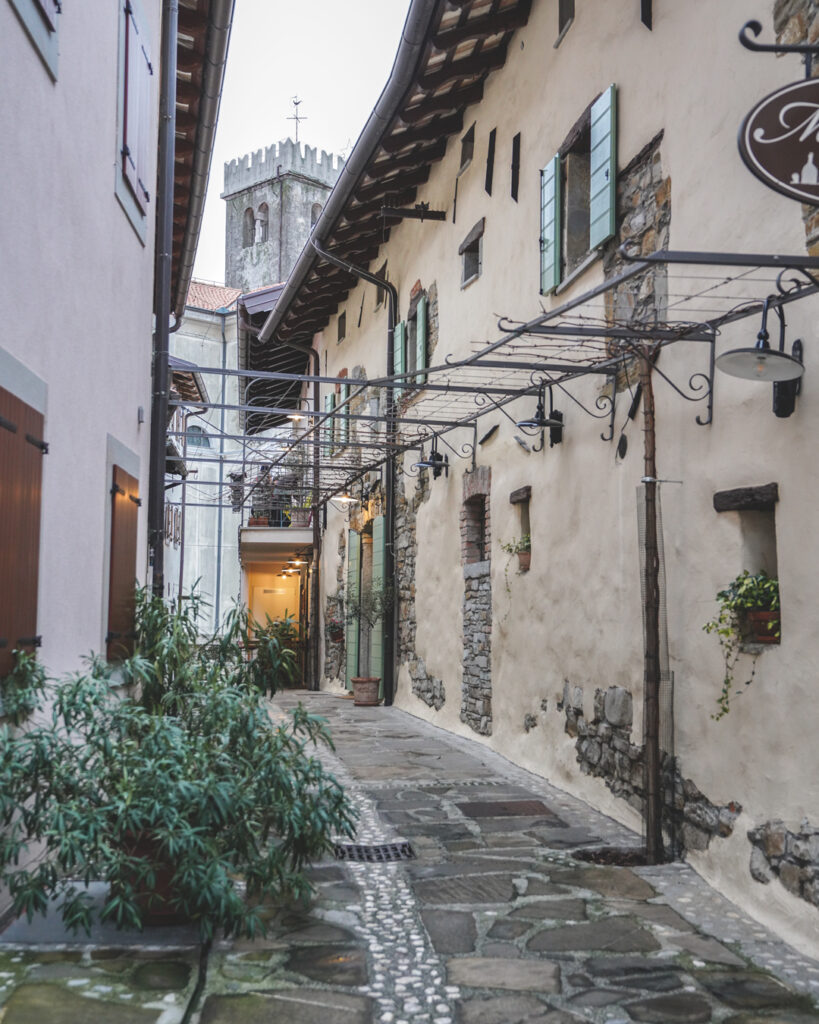
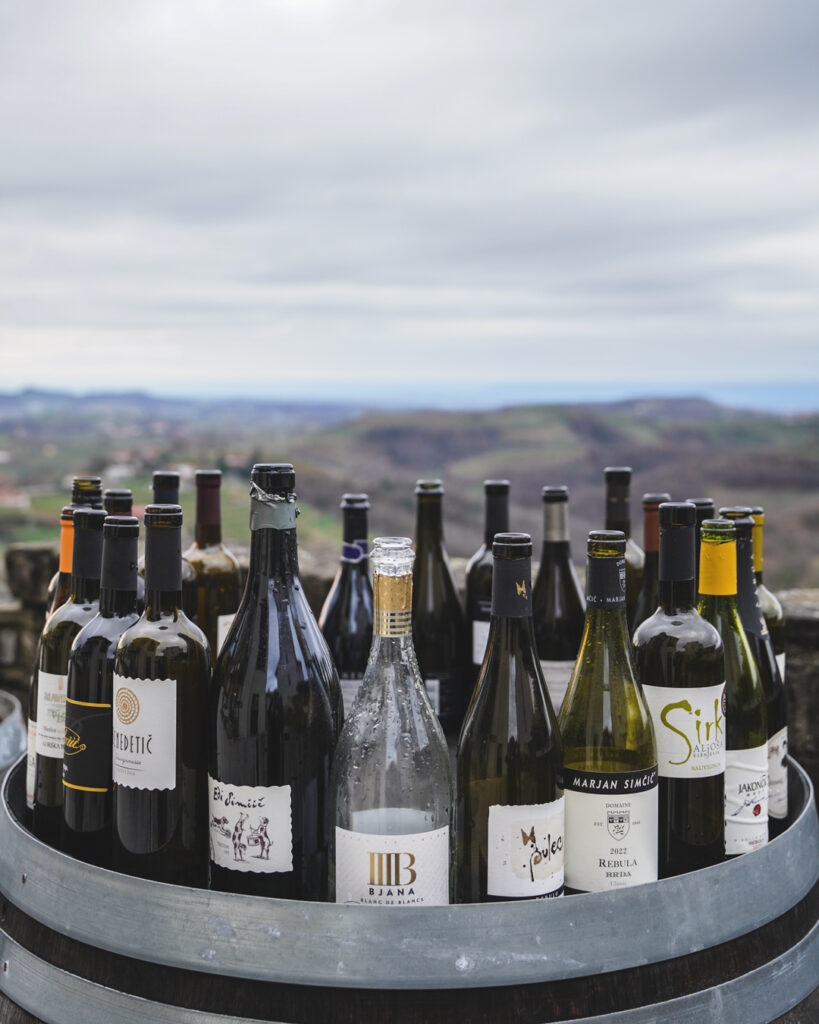
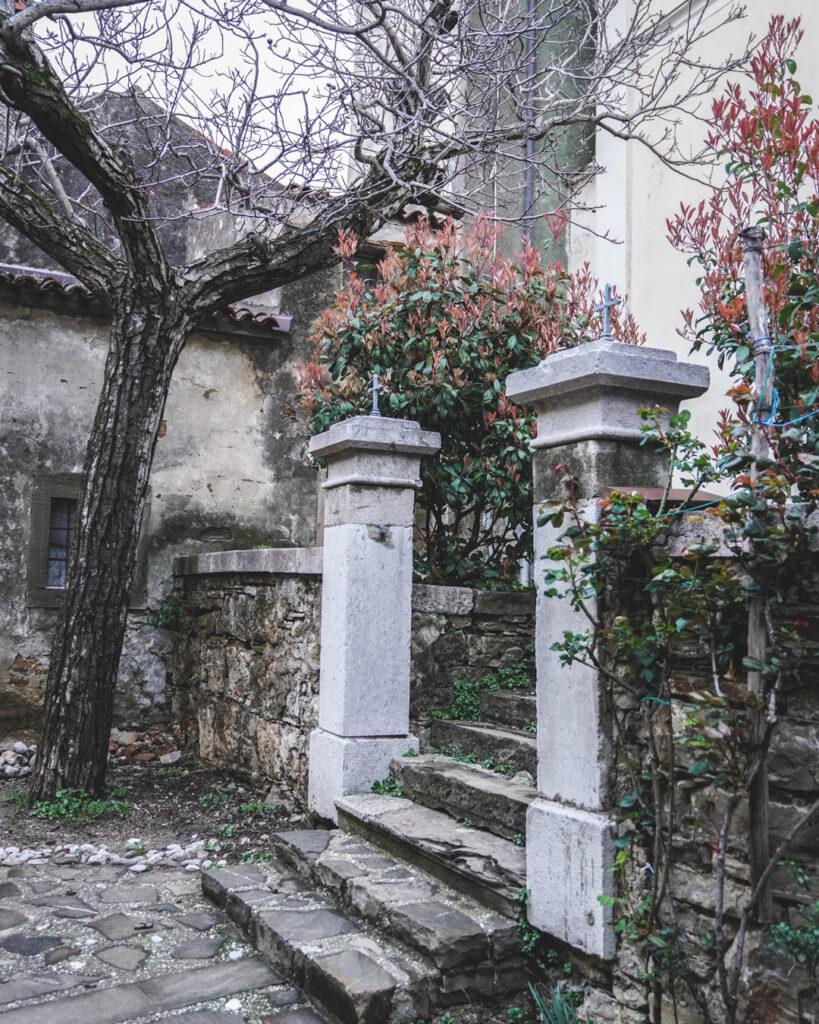
This fortified medieval village, with its narrow alleys and wooden balconies, is an ideal place to spend the night. The village is tiny, so simply wander through its streets and enjoy. Step into St Martin’s Church – whose interior was painted by the renowned artist Tone Kralj – and browse the little shops for souvenirs. For sleeping, the best options are Aldila Art Rooms, located right next to St Martin’s Church in a beautifully renovated historic building adorned with contemporary artworks, or the more budget-friendly – yet equally charming – Little Vista.
Šmartno village is one of the highlights along this 7-day road trip in Slovenia:

Day 3: Road trip in Slovenia, the seaside: Šmartno – Trieste (Italy) – Piran
Šmartno – Trieste: 1 hour / 70 km
Trieste – Piran: 45 minutes / 40 km.
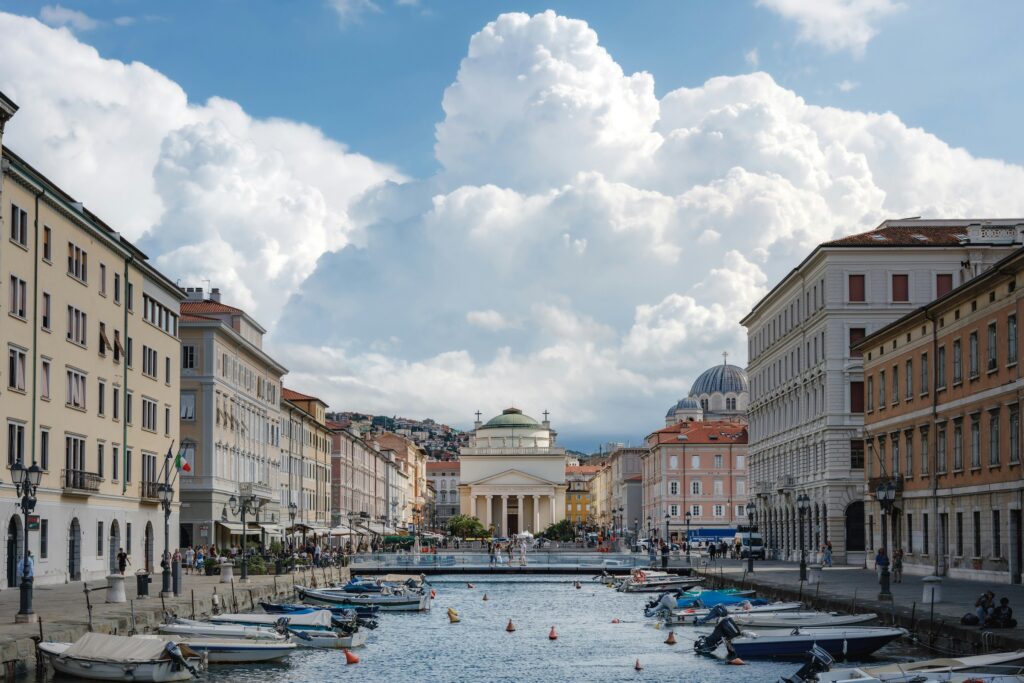
From Šmartno, it’s a one-and-a-half-hour drive to the seaside city of Piran. Slovenia has only about 47 kilometres of coastline, and Piran is the perfect place to make the most of it. Along the way, stop for a coffee in the Italian border city of Trieste,. Trieste used to be the Habsburg Empire’s only harbour city. This is why Trieste is still famed for its Viennese-style cafés. My favourite place is Antico Caffè San Marco from 1914 – this L-shaped café also hosts a bookshop!
Notice that Trieste is in Italy, and there are border crossings.
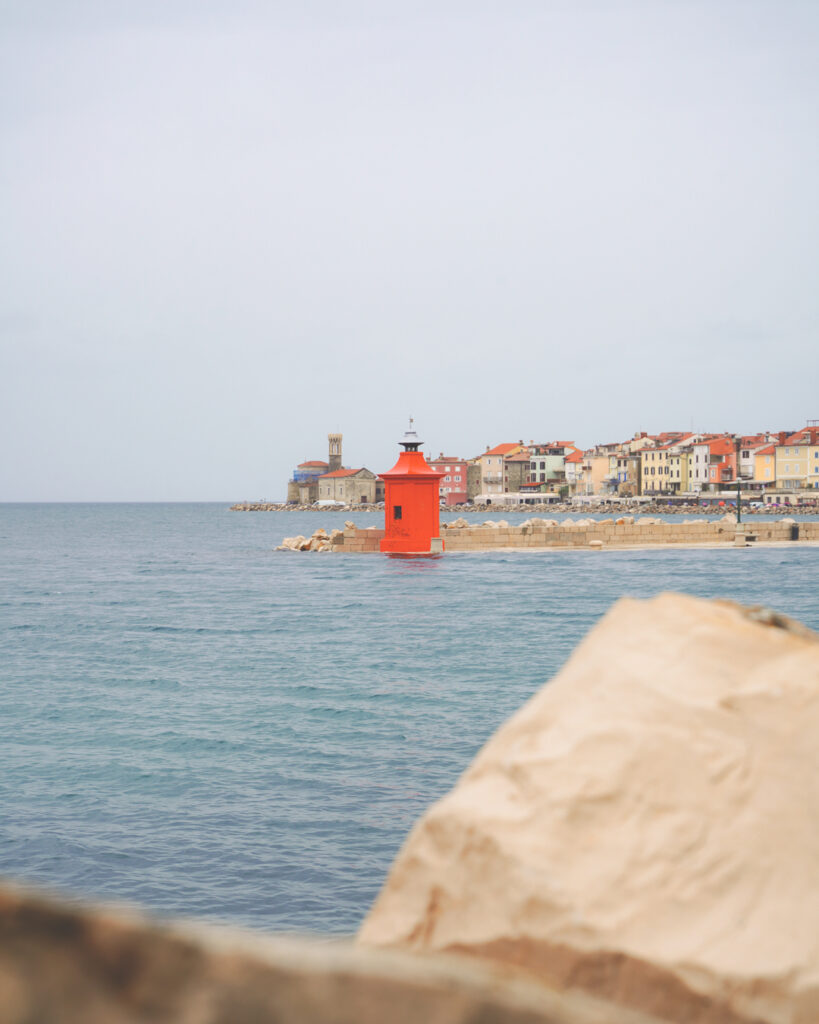
Once in Piran, wander through the narrow, cobbled streets before stepping inside the birth house of the great composer Giuseppe Tartini, where his violin, letters, and death mask recount the story of his career. Casa Tartini sits on Piran’s main square – you won’t miss the mighty statue of Tartini standing proudly in front of it.
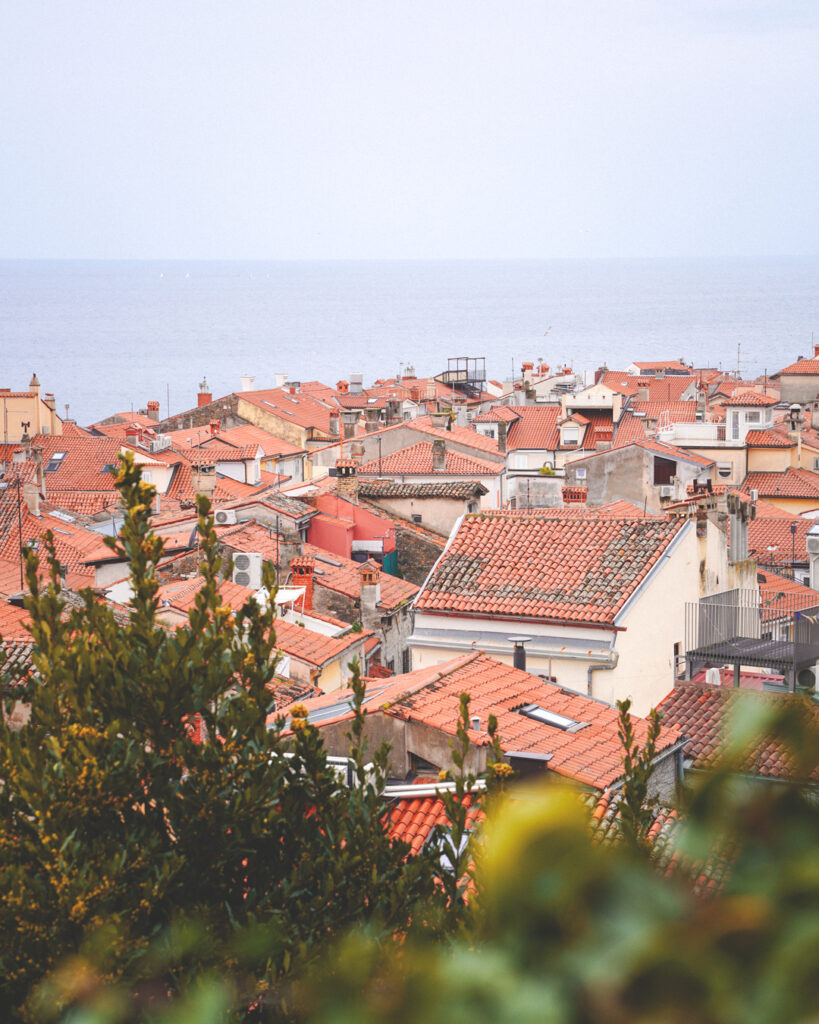
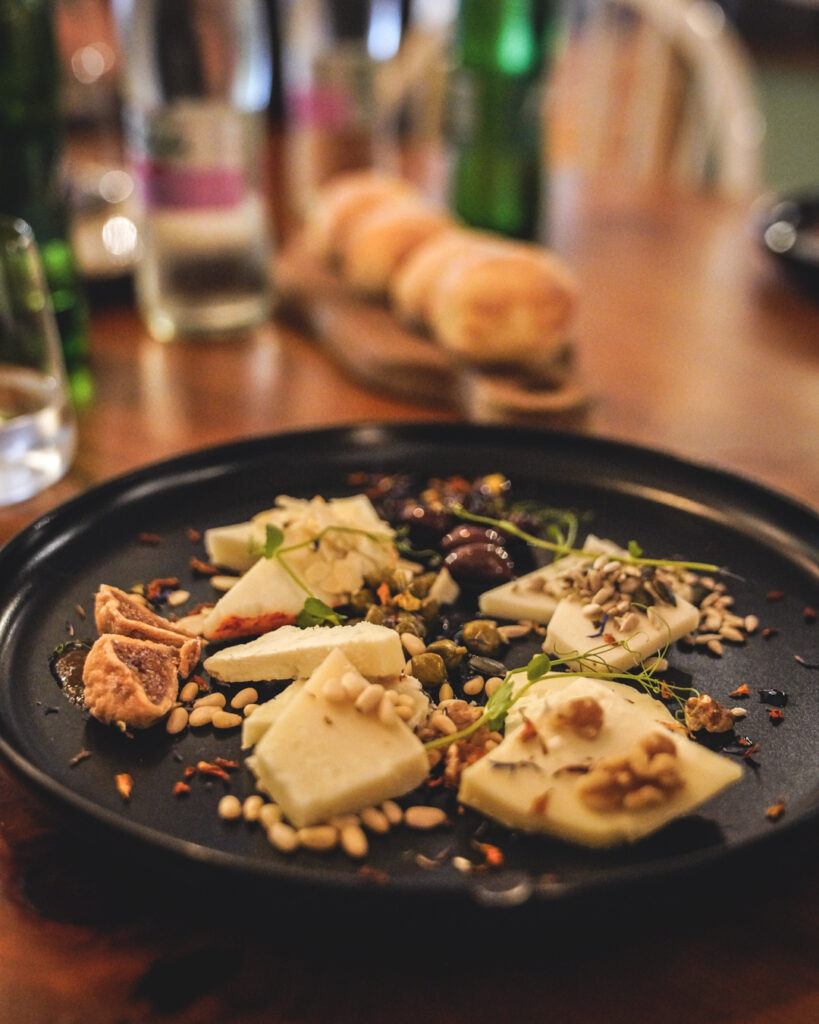
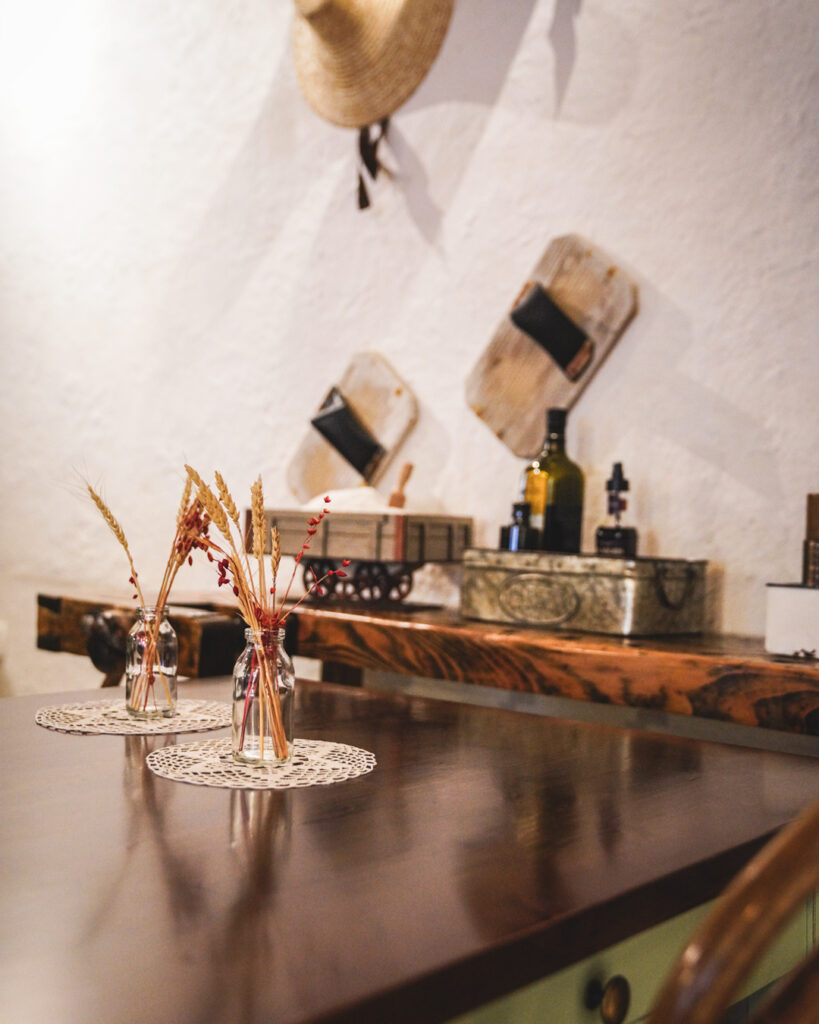
Piran is made for walking. Before dinner at Inn Rostelin (photos below), peek into the Church of St Peter just behind the main square. Then climb up to Zvonik, also known as the Campanile Bell Tower, situated at Adamiceva ulica 3-1. Here, you’ll find breathtaking Adriatic views over the city and sea.
For souvenirs, pop into Nika’s Tiny House near Casa Tartini. The cute little items representing different sides of Piran, from seagulls on wooden boats to the grand facades, are made of driftwood.
Day 4 Piran–Izola–Lipica: From the coastline to a stud farm
Piran – Izola: 25 minutes / 15 km
Izola – Lipica: 40 minutes / 35 km
When you’re ready to leave Piran, begin the 50-kilometre drive inland to Lipica, home of the world-famous Lipizzaner horses. But before leaving the coastline, make a stop at another Adriatic seaside town, Izola.
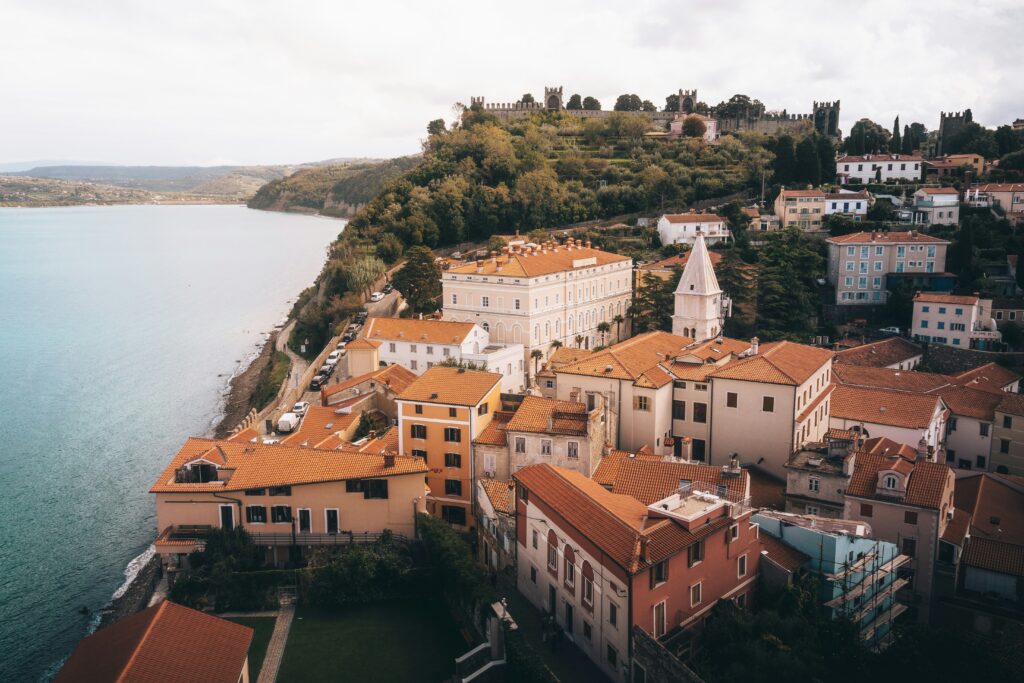
Izola is an ancient Roman harbour town with about 11,000 inhabitants. Today’s travellers will find beaches, excellent food, and a pretty old town here. After a relaxed stroll through its charming streets, sit down for a leisurely lunch at Hiša Torkla before continuing inland. Their speciality is the open grill and its barbequed delights – although the more local food is delicious too, such as asparagus with fuzi pasta.
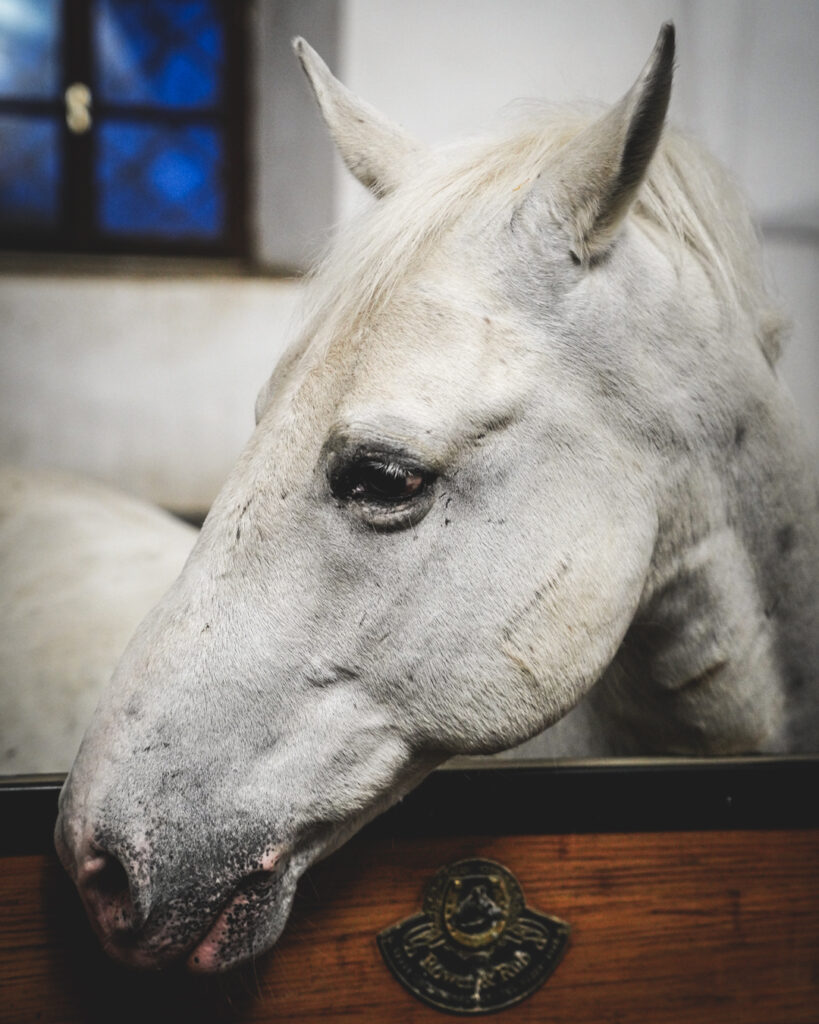
A must stop for a horse and nature enthusiast is Lipica, a UNESCO World Heritage Site and the world’s biggest Lipizzan stud farm. The farm is located inland, near the border with Italy. The stud farm also has extensive grounds and the atmosphere here is warm and friendly, yet a touch aristocratic. This is where you can witness the grace of the Lipizzan white horses, once favoured by royal houses across Europe.
Stay overnight at the modern Hotel Maestoso, located on the estate, and enjoy a fabulous dinner.
Day 5-7: From Lipica back to Ljubljana (end of the road trip in Slovenia)
Lipica – Ljubljana: 1 hour 10 minutes
From Lipica, it’s time to head back to Ljubljana, an hour’s drive to the northeast.
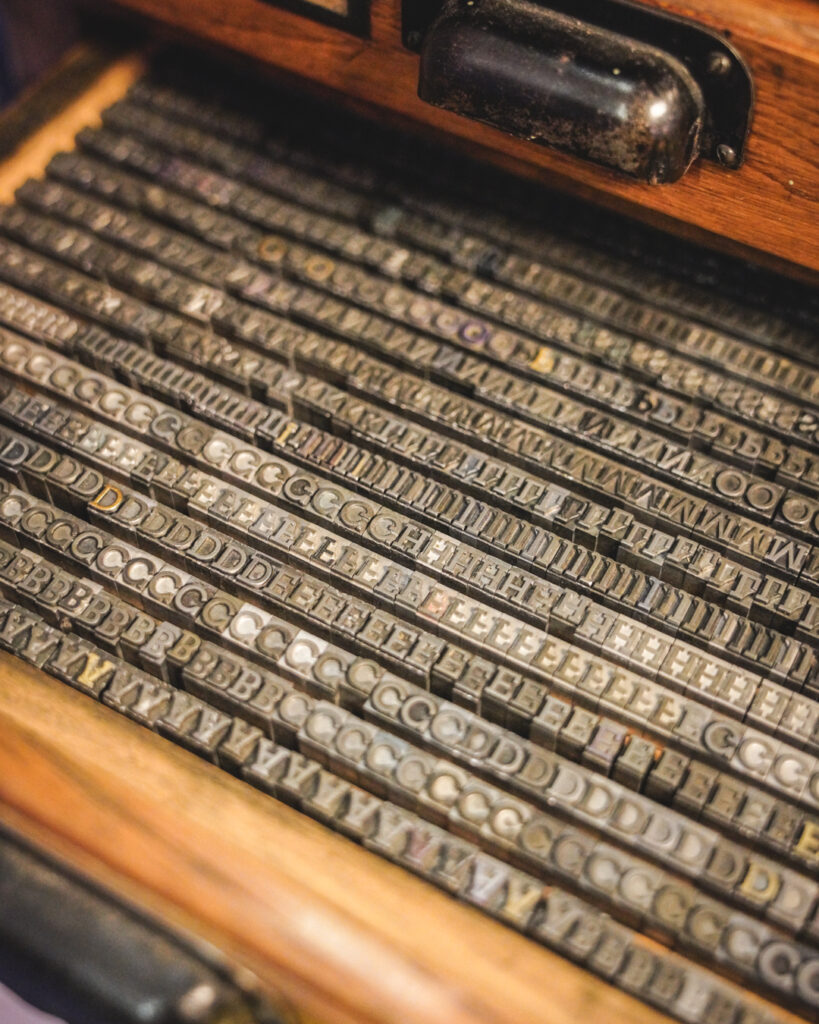
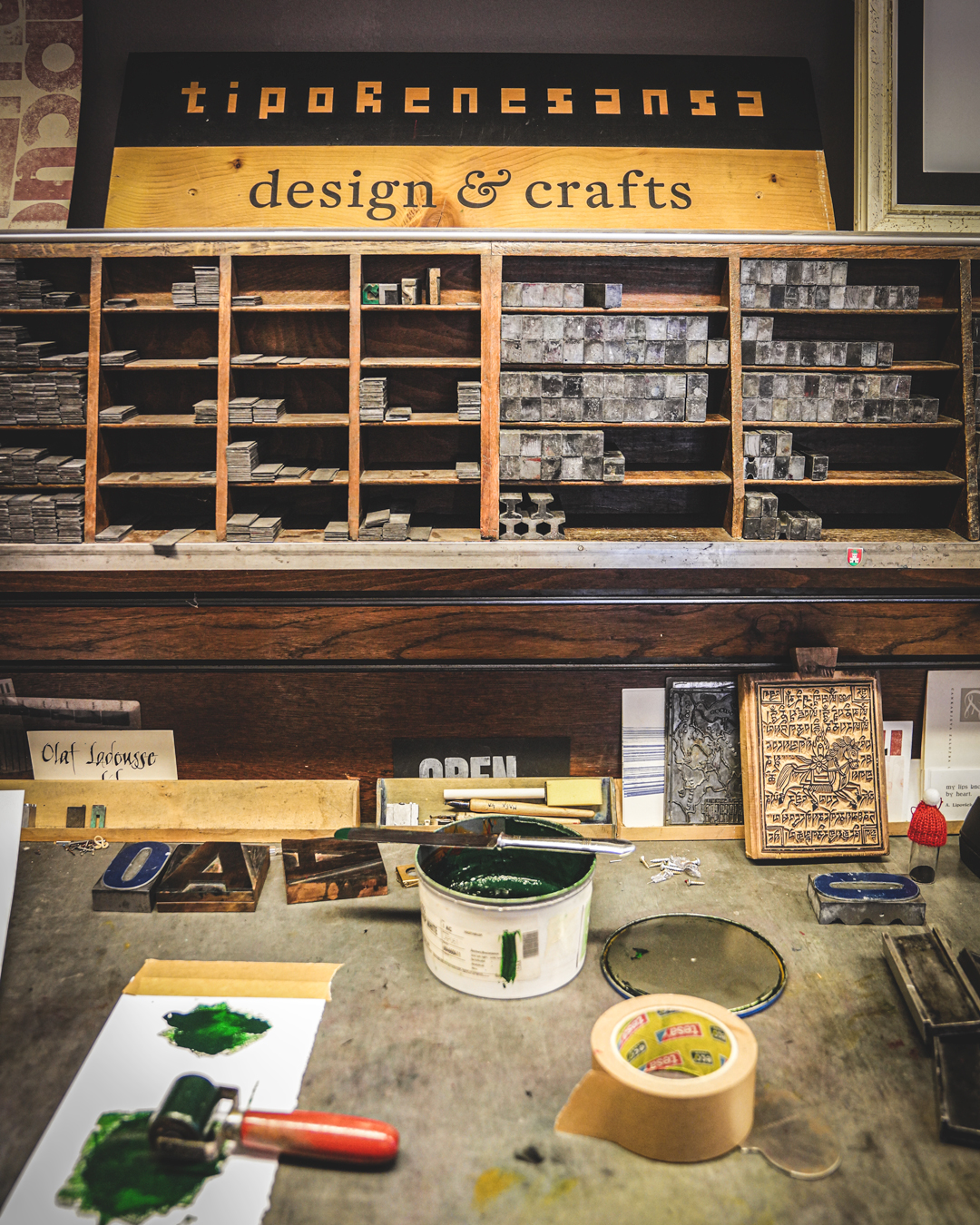
After settling in, visit one of my favourite spots in the city, Tipo Renesansa. Here, you can try your hand at manual typesetting or browse the pretty items and purchase some souvenirs.
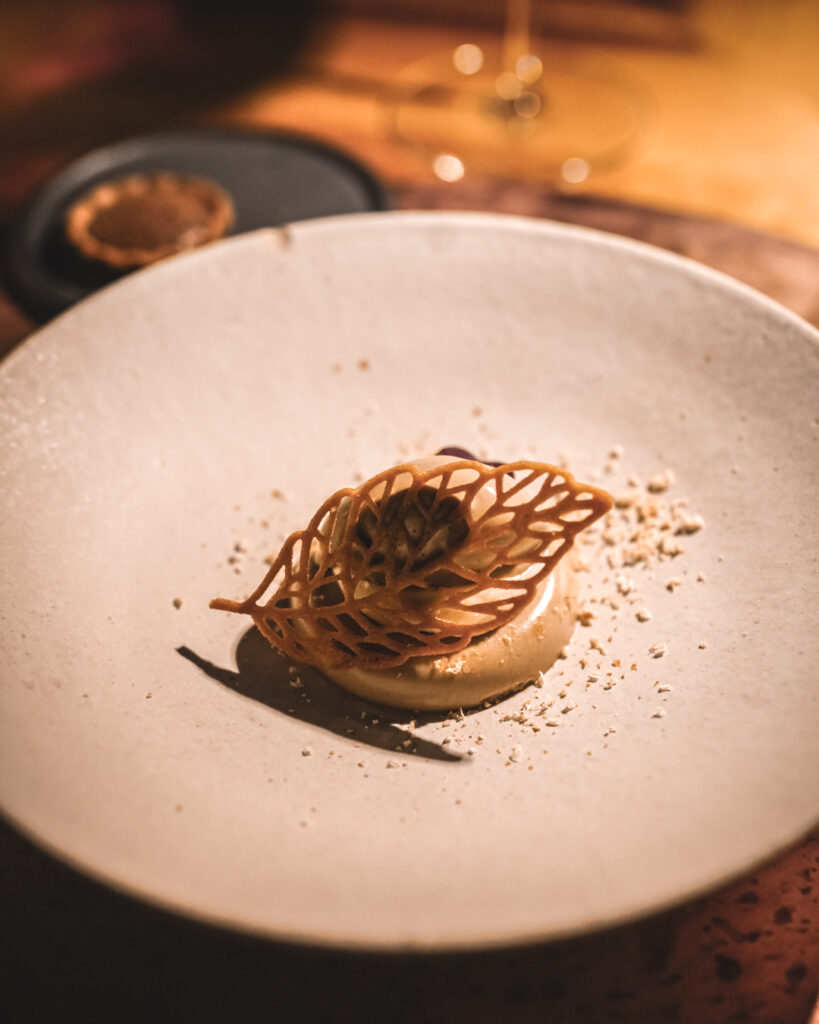
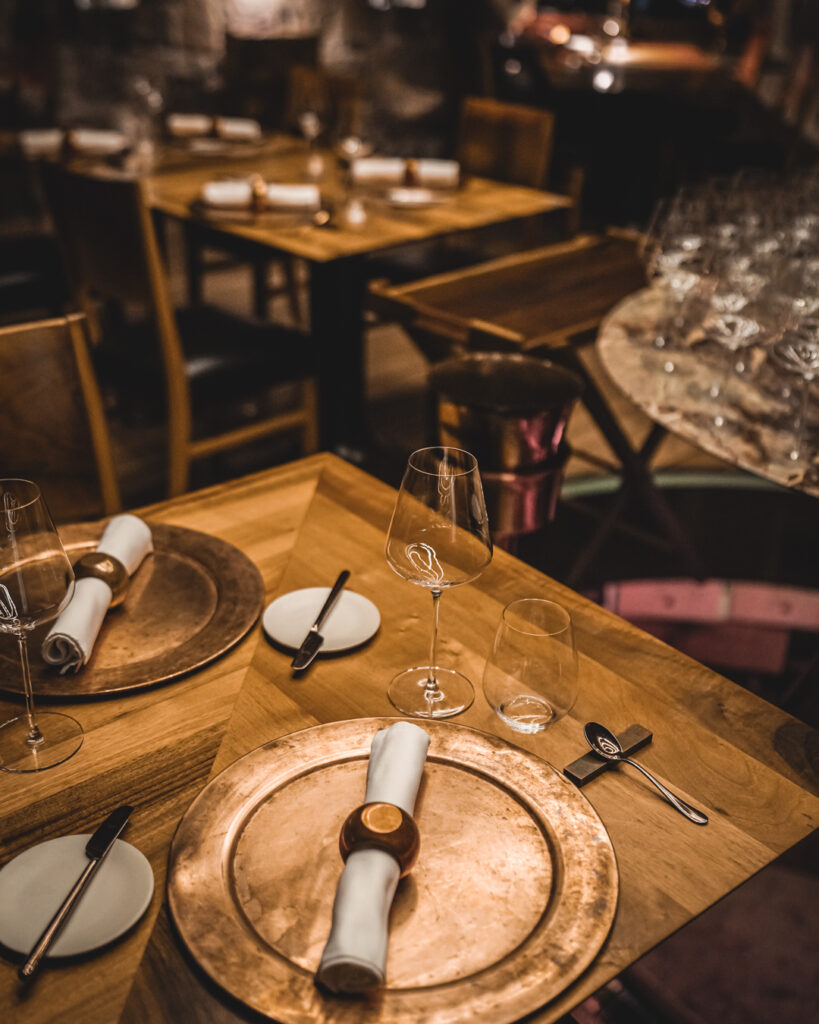
My tip is to end your visit to Ljubljana with a bang and dine in the historic Archer’s Tower of Ljubljana Castle. Here, Strelec Restaurant’s Michelin-starred cuisine meets breathtaking city views. When full, tuck into the super comfy bed at Occidental Ljubljana, located in the historic city centre.
On your last day in Ljubljana, stretch your legs and walk around, and leave possibilities for chances!
And that’s the end of this 7-day road trip itinerary in Slovenia! Please feel free to comment if you have other suggestions for driving around the country.
***Main image: Detait / Unsplash
*** I was hosted on this trip by I Feel Slovenia and Visit Ljubljana
Are you interested in more stories about Slovenia? Read about my train-tripping experience in this article I wrote for The Sunday Times!


